UDUS Management Fastens Concentration on Students’ Healthcare Amid Recent Tragedies
Abubakar Muizat |
February 3, 2026 |
👁 2 Views
The atmosphere was cool and calm at the College of Health Sciences, Usmanu Danfodiyo University, Sokoto on Sunday 28th of December, 2025 before an unsettling message came in on various college WhatsApp groups. Before the college and entire university community could steady itself from one loss, it was thrust into another.
The university community, still mourning the death of a 500-level Medicine and Surgery Student, Abdulwahab Adebayo Balogun, was forced to go into another period of mourning for the passing of Hassan Umar Ishola, his colleague from the same department, within the same week.
Having endured weeks of illness that left him immobilized and dependent on life support, Abdulwahab finally succumbed, leaving behind grief, unanswered questions and the campus in shock.
Barely five days later, Hassan Umar Ishola died at the Accident and Emergency Unit of UDUTH after a brief illness, deepening the sense of dread that had begun to grip the university.
These incidents sent ripples of concern through the UDUTH community and beyond. The gravity of the situation, in fact, drew the attention of the Sokoto State Epidemiology Board, which made an assessment of the college and students’ hostels, examining water sources and living conditions to determine whether there is any source of public health threat.
According to a source from the university management, the college organised an emergency meeting on January 7th, 2026. Bringing together key stakeholders and heads of department, the session was convened to review the surrounding circumstances of the deaths and modality to consider appropriate responses. Central to the discussion was the behaviour of the students towards seeking medical attention and the Tertiary Institution Social Health Program (TISHIP).
To examine these overlapping concerns, GAMJI PRESS, UDUS chronicles the level of awareness of the scheme among the students.
TISHIP, What?
TISHIP was introduced in 2008 as a part of the National Health Insurance Authority (NHIA), formerly known as the Nigerian Health Insurance Scheme (NHIS) which was established under the National Health Insurance Act signed into law in 2022. It aims to make healthcare accessible and affordable for the populace.
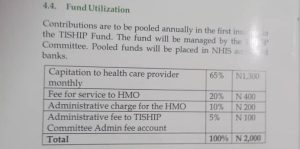
The package is accessible to students enrolled in a tertiary institution, including federal, state, and privately-owned universities. Students are expected to pay a sum of #2000 every session to be eligible for the standard TISHIP package.
📸 || Abubakar Muizat: NHIS documentation of how funds collected from students is utilized
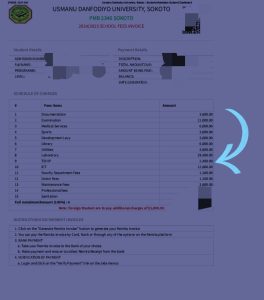
Although, in Danfodiyo varsity, according to the school fees schedule for last session, students paid ₦2400 and this forms a part of the school fees.
📸|| Abubakar Muizat: UDUS school fees schedule showing the amount of TISHIP paid by students for the 2024/2025 academic session
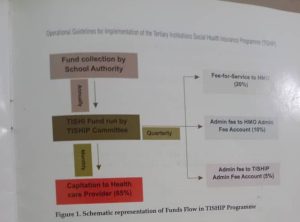
The school remits this money to its designated Health Maintenance Organization (HMO) which in turn liaises with the NHIA. A breakdown of the charge indicates that ₦1300 covers monthly capitation of the healthcare provider, ₦400 is paid as service charge to the HMO, ₦200 is for administrative charge to the HMO and ₦100 is allocated as an administrative fee to the TISHIP committee account.
📸 || Abubakar Muizat: NHIS documentation of the schematic representation of funds flow in TISHIP programme
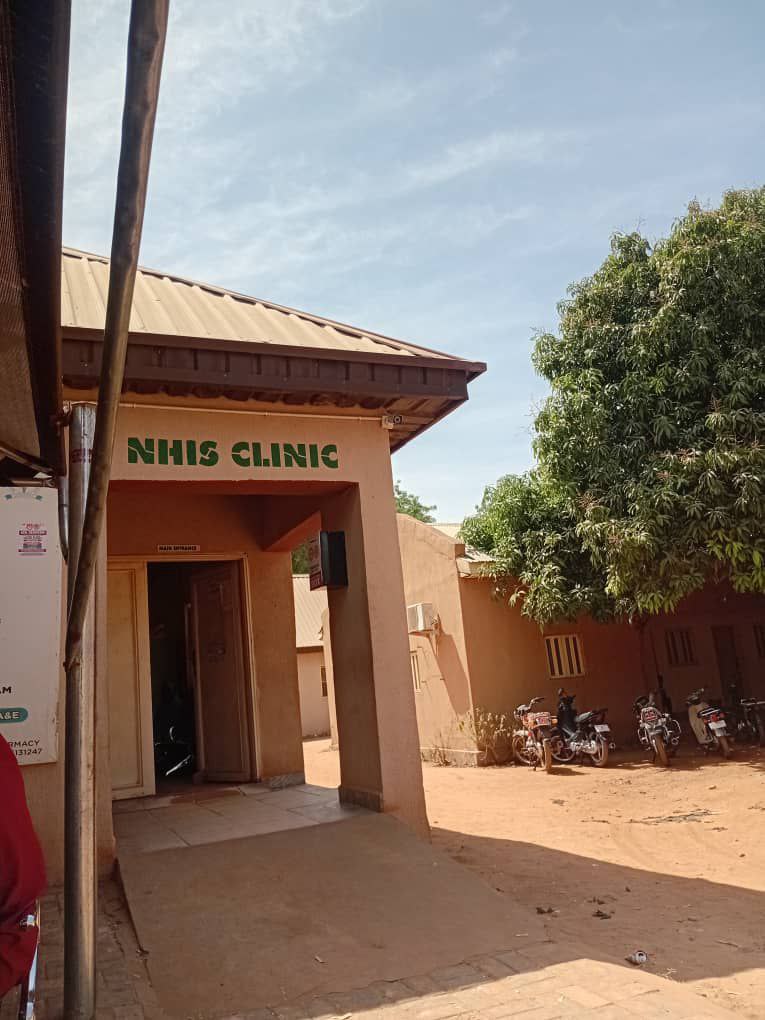
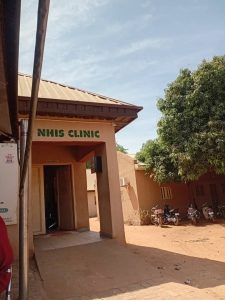
Students are expected to go to the NHIA accredited clinic located close to the main gate UDUTH. Contained in the database are the names of all registered students submitted by the school. From there, Hospital Registration Number (HRN) and authorization code are generated which gives students access to medical services.
📸 || Abubakar Muizat: NHIS clinic along UDUTH main gate
Mixed Reactions Trail TISHIP’s Operation
Although the university has been running the scheme for years, many students like Zainab, a 200 level student with shortsightedness, are not aware of its existence, benefits and how to access its services.
Zainab said, “I am a beneficiary of my mum’s NHIS package. Unfortunately, my glasses have expired and are not yet due for renewal under her package. I cannot see clearly and this affects me both in the lecture hall and in night class.”.
She expressed excitement upon learning that she is a pre-registered beneficiary of TISHIP which guarantees her a new pair of glasses. Her experience is one of many that shows a clear knowledge gap among students on the use of TISHIP.
Unlike Zainab, other students who normally seek to access the service described their experience as bitter, underlining inadequacies associated with the operation of the scheme.
“The queue is always too long. It takes double the time in a normal consultation room,” Aisha, a 500 level student complained. She recounted difficulty in accessing the TISHIP’s service on one occasion that she had to pay out of pocket while on admission, saying “My sister visited the NHIS clinic to generate my authorization code but was turned down for reasons beyond my comprehension.”
More Stories
Mustapha, a 500 level student, shared two experiences he had with the NHIA clinic that will remain with him forever. On one occasion, he was attended to by a doctor who barely listened to his complaints before giving a prescription without diagnosis.
“On another occasion, I visited the clinic and the doctor prescribed medications without explaining how to take them.
“I ended up taking Omeprazole and Antacid together, and my symptoms persisted for several days,” he recalled, noting that his current clinical knowledge made him realize the two drugs counteract each other.
Findings by this reporter indicates that some students face challenges while receiving medical attention in UDUTH. With the university community consisting of students from various states and regions of the country, living far away from their parents, and relatives, many rely on the institutional health service. This further brings into limelight, the importance of the healthcare provision by the school.
Official Explains Barriers to Service Delivery, Students’ Leader Weigh In
Speaking about the inconsistencies facing the scheme, Mr. Yaqubu Alhasan, the desk manager of UDUTH branch said, “the university management has failed to send an updated list of students and this will make it difficult for some students to access care. Students whose names are not on the list should go to the main campus clinic to get a referral”.
He added that they are going to discontinue services to certain HMOs including that of the university, citing non compliance of payment as the main reason. “We discontinued the service on December 15, 2025 but NHIA intervened and requested a grace period. We have given the school an ultimatum and if the university does not pay up, students will no longer have access to their service.
The President of the Usmanu Danfodiyo University Medical Student Association (UDUMSA) acknowledged that he is aware of the constant struggle that students go through, trying to access NHIA services.
“Yes I am aware that many students do not know what the standard TISHIP package contains. In a bid to address that, we organized an online webinar through the office of the UDUMSA welfare director. The NHIA officer, UDUTH was the guest speaker and we had 120 students in attendance.”
Regarding the challenges students face in accessing timely healthcare services, “I am engaging the SUG and our provost to help establish a station at the clinic designated specifically for students,” he explained.
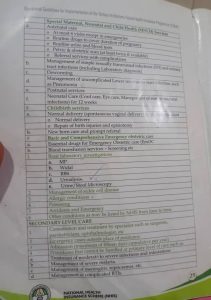
The standard TISHIP package has a two tier structure comprising the primary and secondary levels of care. Under the Primary care package, beneficiaries are entitled to medical consultation, family planning services, treatment of common infections and infestation like malaria, management of uncomplicated hypertension and Diabetes Mellitus, routine antenatal care, normal deliveries with episiotomy repair, minor surgical procedures,.blood transfusion services, basic laboratory investigations such as Widal test and Microscopy for Parasites and much more.
📸 || Abubakar Muizat: NHIS documentation listing some of the medical services under the scheme
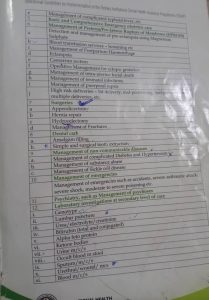
The Secondary level of care provides access to specialist consultation, hospital admission for up to 15 days annually, management of severe infections, cesarean section, surgeries like appendectomy, hernia repair, hydrocelectomy and fracture management among others.
📸 || Abubakar Muizat: NHIS documentation listing some of the medical services under the scheme
It is clear that the university management is aware of these issues and is working to address them. However, as we await their solutions, a few questions still linger in our minds. Does the title of studentship prevent a person from being ill beyond this list of illnesses? What happens when a student remains on admission for more than 15 days? What happens when a student requires open heart surgery, dialysis or a renal transplant? These are not just ‘what if’s’, cases of students who battled kidney disease and other complicated medical conditions have been documented in our university, some of whom ultimately lost their lives.
Nigerians have witnessed the economy plummet, resulting in the elimination of the middle class. Everyday Nigerians are struggling to make ends meet, and schemes like these that are supposed to cushion the effects are becoming inaccessible. One might wonder ”what is the fate of Nigerian students?”