From Sunrise to Sunset: How a Giri POS Operator Earns Living in a Challenging Economy
By Abdulrahmon Raji
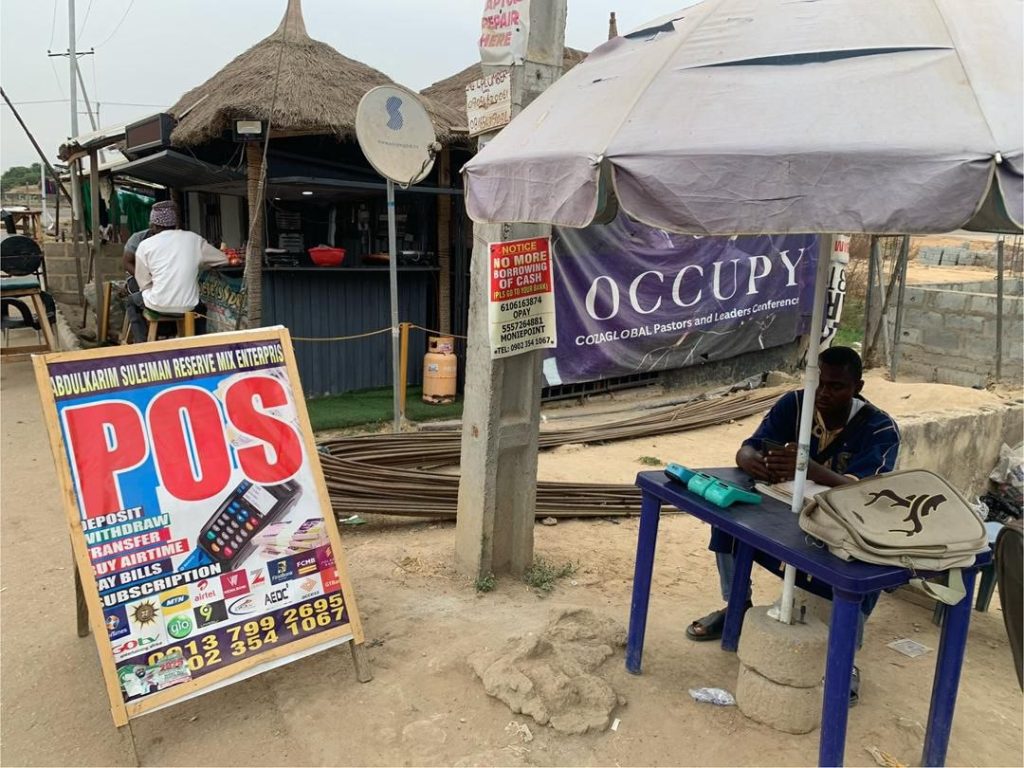
Under a modest umbrella along the busy Giri Hospital Road Junction in Abuja, Abdulkarim Suleiman begins another day of serving customers. With a Point of Sale (POS) machine on his table and a steady stream of residents seeking financial services, the 32-year-old entrepreneur has built a business that not only supports his livelihood but also provides an essential service to the community.
For many residents of Giri, POS operators have become the closest alternative to conventional banking services. Long distances to banks, transportation costs and the need for quick transactions have made POS businesses an important part of daily life.
A Point of Sale (POS) terminal is an electronic payment device used by agents to provide financial services such as cash withdrawals, deposits, money transfers, airtime purchases and bill payments on behalf of banks and other financial institutions. In many Nigerian communities where access to banking facilities is limited, POS operators serve as an important link between residents and the formal banking system.
𝗙𝗿𝗼𝗺 𝗢𝗽𝗽𝗼𝗿𝘁𝘂𝗻𝗶𝘁𝘆 𝘁𝗼 𝗟𝗶𝘃𝗲𝗹𝗶𝗵𝗼𝗼𝗱
Suleiman, who operates Abdulkarim Suleiman Reserve Mix Enterprise, said he ventured into the business about two years ago after noticing the growing demand for financial services in the area.
“I started this business about two years ago because I noticed that many people in this area needed easy access to financial services,” he said.
According to him, the business has become a major source of income and has helped him meet his daily needs despite the country’s economic challenges.
“This business has helped me feed myself and support my family, even with the current economic situation,” Suleiman explained.
𝗕𝗿𝗶𝗻𝗴𝗶𝗻𝗴 𝗕𝗮𝗻𝗸𝗶𝗻𝗴 𝗦𝗲𝗿𝘃𝗶𝗰𝗲𝘀 𝗖𝗹𝗼𝘀𝗲𝗿 𝘁𝗼 𝘁𝗵𝗲 𝗣𝗲𝗼𝗽𝗹𝗲
Operating from a roadside location close to Giri Hospital, he provides a range of services including cash withdrawals, deposits, transfers, airtime purchases and bill payments. Throughout the day, customers visit his stand to carry out transactions that would otherwise require travelling long distances to access banking facilities.

“Many people around here depend on POS operators because there are no nearby banks,” he said. “The service helps them save time and transportation costs.”
The importance of POS businesses has continued to grow in many communities across Nigeria, particularly in areas where access to banking infrastructure is limited. In such locations, POS operators play a significant role in ensuring that residents can conveniently access financial services.
In a data released by the Nigeria Inter-Bank Settlement System (NIBSS), Point of Sale transactions in Nigeria reached more than ₦10 trillion in the first quarter of 2025 alone. This does nothing but highlights the increasing reliance of Nigerians on POS operators for everyday financial services. The rapid growth has been driven by the expansion of agency banking, limited access to conventional banking facilities in some communities and the demand for convenient cash withdrawal and transfer services.
𝗧𝗵𝗲 𝗖𝗵𝗮𝗹𝗹𝗲𝗻𝗴𝗲 𝗼𝗳 𝗣𝗼𝗼𝗿 𝗡𝗲𝘁𝘄𝗼𝗿𝗸 𝗮𝗻𝗱 𝗙𝗮𝗶𝗹𝗲𝗱 𝗧𝗿𝗮𝗻𝘀𝗮𝗰𝘁𝗶𝗼𝗻𝘀
Despite its benefits, the business comes with numerous challenges. One of the major difficulties, according to Suleiman, is poor network connectivity.
“Network problems are one of my biggest challenges,” he said. “Sometimes transactions fail or take too long, and customers become frustrated.”
Failed transactions often create tension between operators and customers, especially when money is debited from an account without immediate confirmation of the transaction.
Another challenge faced by the entrepreneur is mistaken transfers. “Sometimes customers enter the wrong account details, and this can create serious problems and even lead to financial loss,” he said.
𝗖𝗮𝘀𝗵 𝗦𝗰𝗮𝗿𝗰𝗶𝘁𝘆 𝗮𝗻𝗱 𝗦𝗲𝗰𝘂𝗿𝗶𝘁𝘆 𝗥𝗶𝘀𝗸𝘀
Cash scarcity is also a major concern. Suleiman explained that there are occasions when he runs out of cash and must travel to distant locations to obtain more funds for his business operations.
“When cash finishes, I have to travel to Gwagwalada or Abuja to get more. The journey can be stressful and risky,” he said.
He further expressed concerns about personal safety while travelling with large sums of money. “Sometimes you can even fall into the hands of thieves while going to get cash,” he added.
𝗪𝗵𝗲𝗻 𝗘𝗾𝘂𝗶𝗽𝗺𝗲𝗻𝘁 𝗙𝗮𝗶𝗹𝘀
Machine malfunction is another obstacle that occasionally affects his business. When the POS terminal develops faults, transactions are delayed and customers are forced to seek services elsewhere.
“When the machine develops a fault, I cannot attend to customers, and that affects my income,” Suleiman noted.
Despite these setbacks, he remains committed to the business and optimistic about the future. “Even with the difficulties, I thank God because the business is helping me survive,” he said.
𝗔 𝗟𝗶𝗳𝗲𝗹𝗶𝗻𝗲 𝗳𝗼𝗿 𝘁𝗵𝗲 𝗖𝗼𝗺𝗺𝘂𝗻𝗶𝘁𝘆
An observation at the location revealed a steady flow of customers patronising the POS stand. Residents arrived at different times to withdraw cash, transfer money and purchase airtime, demonstrating the continued relevance of POS services in the community.
As economic realities continue to push many Nigerians toward self-employment, small-scale enterprises such as POS businesses are becoming increasingly important. Beyond generating income for operators, they provide convenient financial services and contribute to local economic activities.
𝗛𝗼𝗽𝗲 𝗕𝗲𝘆𝗼𝗻𝗱 𝘁𝗵𝗲 𝗧𝗮𝗯𝗹𝗲
For Abdulkarim Suleiman, the small table by the roadside represents more than a business. It is a source of hope, resilience and determination in the face of economic uncertainty. His story reflects the experiences of many grassroots entrepreneurs who continue to create opportunities for themselves while serving their communities.