The True Cost Of Degree: How Future Health Professionals Are Trading Health For Degrees
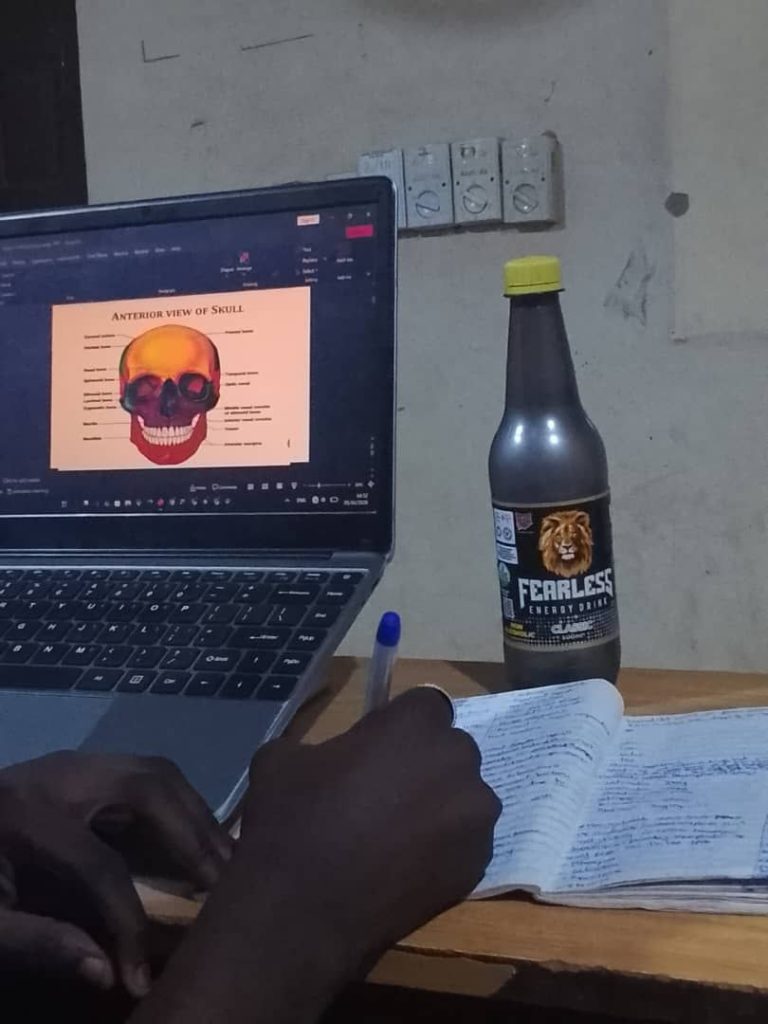
“I took an energy drink in my 200 level to help me stay awake through the night so I could study, but when it got to 12am, I found it difficult to understand what I was reading. The next morning, I was blank in the exam hall,” Mansoor, a 300-level student, said with a sigh as he recalled his early days in college.
“That was not the worst part,” he continued. “I have an ulcer and it triggered an episode. Since then, I have stayed far away from energy drinks and other stimulants.”
The situation experienced by Mansoor is not isolated. The struggle to keep up academically has quietly evolved into a pattern of survival, one that comes asking for health in return from many students studying health-related courses at Usmanu Danfodiyo University, Sokoto.
𝗪𝗵𝗲𝗻 𝗣𝗿𝗲𝘀𝘀𝘂𝗿𝗲 𝗕𝗲𝗰𝗼𝗺𝗲𝘀 𝗖𝘂𝗹𝘁𝘂𝗿𝗲
The popular opinion is that medical school is very demanding as students are expected to absorb a large volume of information within a short range of time. When exams approach, the pressure intensifies. Moments like these make coping mechanisms like energy drink consumption and “Till Day Break (TDB)” the order of the day.
“Our examination timetable is back-to-back with no breaks. I have to stay up at night to prepare for exams,” Aisha, a 400-level student, said, exhaustion evident in her voice. “I have tried everything, but nothing works. I do not like reading during the day because I end up understanding little to nothing. We also have lectures that make reading during the day almost impossible.”
𝗙𝗲𝗮𝗿 𝗼𝗳 𝗙𝗮𝗶𝗹𝘂𝗿𝗲, 𝗗𝗿𝗶𝘃𝗲 𝘁𝗼 𝗦𝘂𝗿𝘃𝗶𝘃𝗲
These acts became an habitual one for many students because of the fear of failure. The fear of remaining in a class while their colleagues move ahead to the next class makes students do everything possible to pass as well. The previous academic session saw a significant number of students repeating the year in the MBBS programme, tightening the margin for error and raising the stakes.
“Last session, when they released Pharmacy and MBBS results, the news was everywhere in college. So many students had failed and it scared me,” Suleiman said.
“I was at 100 level then and it made me rethink my career choice. I realized that repeating a class is not a walk in the park in medical school, so I came in prepared to do anything to survive.”
“At 200 level, we had lectures from 8am to 6pm most days. I was always sleepy and exhausted, so I had to take ‘Predator’ to stay awake to read,” he added.
𝗧𝗵𝗲 200-𝗟𝗲𝘃𝗲𝗹 𝗦𝗵𝗼𝗰𝗸
For many medical students, 200 level marks a turning point. After a relatively familiar 100 level which seems like an extension of secondary school topics, they are introduced to courses like Anatomy, Physiology, and Biochemistry. These are courses characterised with being dense, abstract, and filled with unfamiliar concepts.
“Before entering 200 level, I heard from my seniors that Anatomy was difficult, but nothing could have prepared me for how hard it actually is,” Hauwa said. “We have lectures and practicals throughout the week, and I come back home too tired to study. Sometimes, the workload piles up during exams.”
Interviews by this reporter with 200 level students suggest that it is at this stage that many begin experimenting with stimulants.
𝗔 𝗚𝗿𝗼𝘄𝗶𝗻𝗴 𝗗𝗲𝗽𝗲𝗻𝗱𝗲𝗻𝗰𝗲 𝗮𝗻𝗱 𝗙𝗶𝗻𝗮𝗻𝗰𝗶𝗮𝗹 𝗜𝗺𝗽𝗹𝗶𝗰𝗮𝘁𝗶𝗼𝗻
The most commonly consumed energy drinks on the Usmanu Danfodiyo University University Teaching Hospital Teaching Hospital campus are “Fearless” and “Predator.” This is evident in the stacks of these energy drinks and the empty cans that fill classroom waste bins every morning.
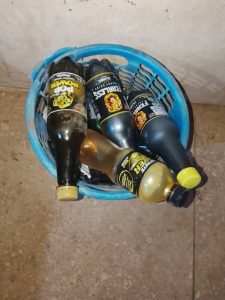
A single bottle costs about ₦500. Over a month, a student can go on, drinking about 25 of these bottles, with expenses on these drinks rising to around ₦12,500 or even more. This accounts for about 63 percent of the Nigerian Educational Loan Fund (NELFUND) monthly upkeep. With over 932,000 students supported across 288 tertiary institutions, many depend on this allowance, forcing them to choose between their basic needs and spending on academic survival.
Meanwhile, businesses around campus thrive on this increased demand.“Before exam season, I sell about one pack a day. Now, I sell two to three packs daily,” Abdul, a sales representative at a campus stall, said.”

This growing dependence is not just a campus trend but also a stronger indication of a wider pattern. The Nigerian energy drink market is estimated to be worth 250 million dollars in 2024, with projections to reach 355 million dollars by 2030. Globally, consumption exceeds 5 billion litres across more than 160 countries.
𝗪𝗵𝗮𝘁 𝗶𝘀 𝗜𝗻𝘀𝗶𝗱𝗲 𝘁𝗵𝗲 𝗕𝗼𝘁𝘁𝗹𝗲
“Anytime I take “Predator”, it helps me stay awake, but I feel very hungry and sometimes my heart beats really fast. I was once informed that it is not safe, but I do not know the reason behind that,” Favour said.
Energy drinks are designed to boost alertness and focus. Their ingredients include caffeine, sugar, taurine, guarana, and other stimulants. Caffeine, specifically, works by reducing fatigue and increasing alertness, but not without consequences.
Studies show the effect of high caffeine intake as increased heart rate, elevated blood pressure, insomnia, and nervousness. In severe cases, it has been associated with serious cardiovascular complications. The recommended daily caffeine limit is 400 mg, with excessive intake posing serious health risks.
There are also reports of extreme outcomes, including acute kidney injury linked to heavy consumption, and worsening of ulcers due to increased gastric acid secretion.
𝗧𝗵𝗲 𝗛𝗶𝗱𝗱𝗲𝗻 𝗛𝗲𝗮𝗹𝘁𝗵 𝗧𝗼𝗹𝗹 𝗮𝗻𝗱 𝗔𝗱𝘃𝗶𝗰𝗲
“As a psychiatrist, I have seen students who entered medical school with intact mental health but later developed anxiety and even schizophrenia,” Professor Yunusa, the Head of Department of Psychiatry, UDUS said.
“Sleep is a physiologic phenomenon. It helps with restoration, improves the immune system, consolidates memory, and supports tissue repair,” he added. “An adult needs 8 hours of night sleep. Lack of sleep can lead to forgetfulness, irritability, easy fatigability, weak immune system and increased susceptibility to illness. Caffeine has also been reported to trigger psychotic disorder.”
Giving medical students advice on how to prioritize their health while achieving excellent performance in academics, Professor Yunusa explained, “Students have 24 hours in a day. If you spend 8am to 5pm in class, that leaves out 15 hours to take care of other things. Stay back and revise the day’s work from 5pm to 8pm, socialize for one hour, and do other activities. Go to bed by 9pm and wake up by 5am, that is 8 hours of sleep as recommended. Revise again before class and review everything you have been taught during the weekend. With this, you can be prepared for exams without relying on stimulants,” he advised.
𝗙𝗶𝗻𝗱𝗶𝗻𝗴 𝗮 𝗪𝗮𝘆 𝗢𝘂𝘁
While the usage of stimulants is becoming a culture, not all students are or remain in the dangerous cycle. Fatima explained how she tried to use stimulants too, but failed at it.
“I used to take stimulants for TDB in 200 level, but I no longer do. It did not work. I have found what works for me to be studying during the day consistently. Discipline is key, she said.
Many medical students are gradually trading their health and financial stability for academic survival. With the alternative being failure, the real question remains, “Is the price worth the grade?”