Amid Wanting Facilities in UDUS Hostels, Students Navigate Common Challenges Unperturbed
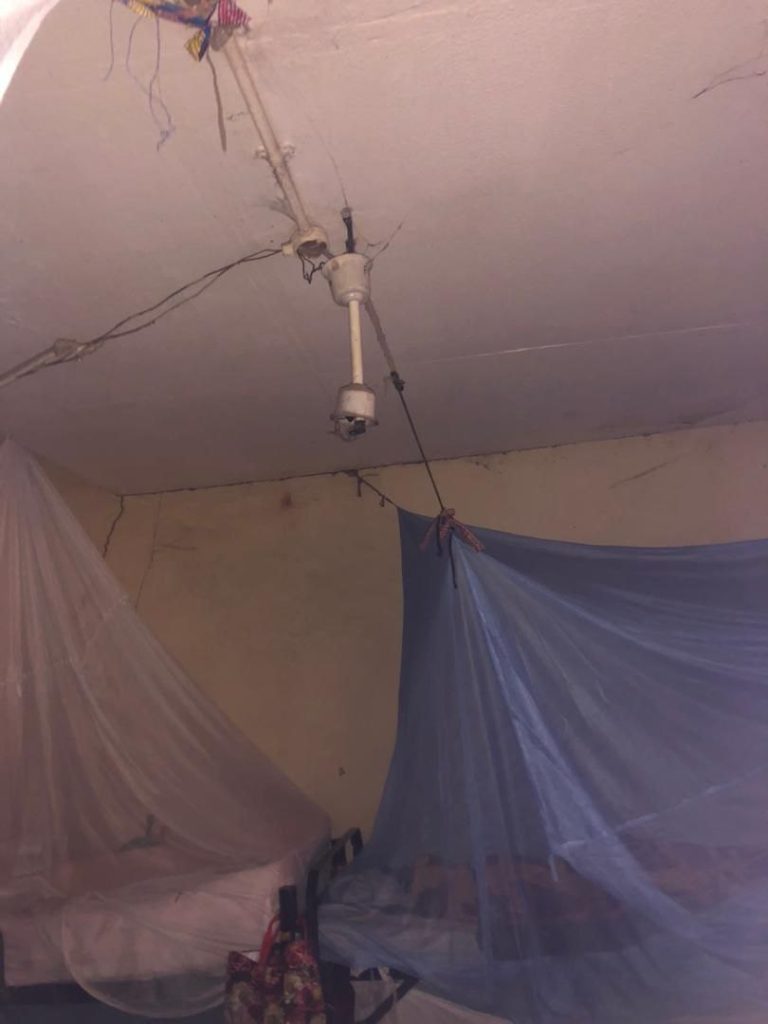
Sitting at the gulf of Sub–Sahara Africa, Sokoto is rated among the hottest locations in Nigeria, with the state’s temperature rising above 40°C sometimes.
Despite the hostile weather conditions, poor access to improved facilities have compounded challenges faced by students living in the hostels under the management of Usmanu Danfodiyo University, Sokoto (UDUS).
In this report by Gamji Press, UDUS, Olarinoye Rabiat Mosunmola spoke with several students to uncover the dimensional struggles of these hostels’ occupants — as survival comes with woes.
Aisha Muhammad, a resident of Zamfara hostel, put on a worried face as she recounted her experience with poor facilities on a sunny Saturday afternoon in February 2026. As the fuming atmosphere unleashed an unforgivable heat, the reality of living without a fan hit Aisha and her roommates.
While some occupants confirmed the absence of functional ceiling fans in their hostels, interrupted power supply stood out among the reasons those students were plagued by recurring insufficient ventilation.
“There is no fan in our room. At night, the heat becomes unbearable,” Aisha said. “We spread mats on the floor and try to sleep near the window, but even that does not help,” she continued.
For other students, installed fans have become objects of decoration in their rooms due to unstable electricity.
Abdullahi Samsiya (pseudonym) groaned: “We have fans, but what is their benefit when there is no stable power supply? The electricity goes off for hours, sometimes all night.”
To escape the suffocating heat, some students interviewed by this reporter shared that they now depend on hand fans. For few others, buying small rechargeable fans is a compelling decision that does not go without taking tolls on their financing.
Several students also identified overcrowding as another factor that worsened the condition. With multiple occupants sharing a room, the air becomes stuffy without compromise.
𝗠𝗼𝗿𝗲 𝗦𝘁𝗼𝗿𝗶𝗲𝘀, 𝗠𝗼𝗿𝗲 𝗪𝗼𝗲𝘀
Accommodation in UDUS school hostels fall below the expectations of students, a reason the majority of occupants who could not adapt to the conditions seek alternative in private–owned facilities.
Zainab Adedoja, another resident staying at FBI Hostel, flagged the problem of overcrowding as alarming. She questioned why a room meant for four occupants could accommodate more.
“There is little as to what you can enjoy when it comes to the issue of privacy. Sometimes you just want decorum, but someone else will be interrupting you. We had to create reading time so everyone can have peace.”
The problem of overcrowding has driven the culture of unsanitary practices to be dominant among the hostels’ residents. Students like Zainab describe their experience with polluted environments as uncomfortable, with many people sharing insufficient bathrooms and toilets. “Because of this, maintenance becomes difficult.”
To minimise the implications of improper hygiene, the students emphasised, “We realized that if we do not clean it ourselves, nobody will. So, sometimes we organize ourselves and clean the bathrooms.”
Also, students’ access to improved water supply is far from being easy. Waking up as early as 4:30 a.m. to get water has become a daily survival strategy for Aisha and her colleagues. “If you do not wake up early, you might not get any. So we store water in buckets in case the tap stops running.”
“Planning ahead has become part of our hostel life. However, our problems add up during exams because one needs to manage examination stress as well.”
𝗡𝗮𝘃𝗶𝗴𝗮𝘁𝗶𝗻𝗴 𝗖𝗼𝗺𝗺𝗼𝗻 𝗖𝗵𝗮𝗹𝗹𝗲𝗻𝗴𝗲𝘀 𝗧𝗵𝗿𝗼𝘂𝗴𝗵 𝗨𝗻𝗶𝘁𝘆
Female students are not alone, the male hostels under the school authorities navigate similar plights. Musa Abdulkareem, a resident of Jubril Aminu explained how disconnection from electricity always translates into trying time. However, he lauded students for fostering collaboration in finding solutions to the menace.
“When there is no light, reading at night becomes difficult. I use a rechargeable lamp. Some of my friends use their phone torch. We cannot stop reading because of unavailability of electricity supply.
“Students gather in one room where there is better lighting to study together.”
According to Zainab, understanding, tolerance and proper communication among roommates have proved productive in reducing conflicts posed by over population.
Fateemah Muhammed, another occupant of Zamfara hostel who appeared unperturbed, eased the burdens advanced by the hostel life through supportive culture.
“Even with the problems, we are surviving. We cook together, gist together, and help each other with assignments. It feels like a family.”
𝗜𝗻𝘁𝗲𝗿𝘃𝗲𝗻𝘁𝗶𝗼𝗻 𝗨𝗻𝗱𝗲𝗿𝘄𝗮𝘆 – 𝗨𝗗𝗨𝗦 𝗦𝗨 𝗖𝗧𝗖
During an interview, Baphfa Ibraheem Jafar, the Public Relations Officer of Students’ Union Caretaker (SU–CTC), admitted to the encounters of students in UDUS hostels. He noted, the students’ body has brought the complaint to the attention of the school management, promising swift intervention.
“It is even in fact worth-knowing that the rooms of some of the SU Executives are lacking fans,” he said, continuing “These challenges were discussed between us (the SU Executives), and the Deputy Dean of Student Affairs.”
“And it was assured to us that a proper deliberation about the issue will be done by them and all those challenges will be fixed.”