𝐍𝐀𝐂𝐉-𝐔𝐃𝐔𝐒 𝐓𝐫𝐚𝐢𝐧𝐬 𝐂𝐚𝐦𝐩𝐮𝐬 𝐄𝐝𝐢𝐭𝐨𝐫𝐬 𝐨𝐧 𝐄𝐭𝐡𝐢𝐜𝐚𝐥 𝐄𝐝𝐢𝐭𝐢𝐧𝐠
By Kausar Abubakar Usman
When it comes to Campus Journalism, a platform characterized by reporters who are still trying to find their feet, the red pen, most times, feel heavier than the reporter’s pen itself.
For many student journalists, excessive editing has become a force that strips off their own voice from their reports and reshaps their ideas beyond recognition.
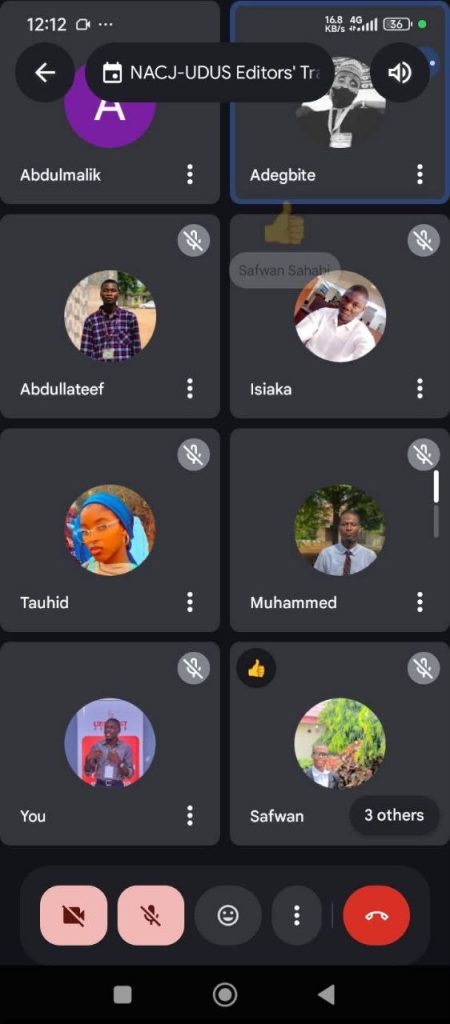
It was against this backdrop that the National Association of Campus Journalists, Usmanu Danfodiyo University, Sokoto Chapter (NACJ-UDUS), organized an editors training aimed at restoring balance and upholding ethics in the various campus press boards.
𝐀 𝐆𝐫𝐨𝐰𝐢𝐧𝐠 𝐂𝐨𝐧𝐜𝐞𝐫𝐧 𝐢𝐧 𝐂𝐚𝐦𝐩𝐮𝐬 𝐉𝐨𝐮𝐫𝐧𝐚𝐥𝐢𝐬𝐦
The training, themed “Dos and Don’ts of Editors; Role of Editors in Ethical Reporting,” was held on Sunday, December 21, 2025, and brought together editors from various campus press boards. The session focused squarely on a recurring challenge in student journalism, the compulsory efforts towards success for editors and the need to preserve reporter’s identity in their reports.
As editing workloads increase for the editors, especially when reports have to published as soon as possible and waiting for the reporter to rewrite the story seems impossible, misunderstandings between reporters and editors have become more frequent.
In some cases, reporters feel their ideas are excessively cut or replaced, resulting in published stories that no longer sound like their own. This, according to the facilitator, has caused decline in motivation of reporters.
𝐓𝐡𝐞 𝐍𝐞𝐰𝐬𝐫𝐨𝐨𝐦 𝐚𝐬 𝐚 𝐋𝐞𝐚𝐫𝐧𝐢𝐧𝐠 𝐏𝐥𝐚𝐭𝐟𝐨𝐫𝐦
The training, facilitated by Mr. Taoheed Adegbite of Nigerian Tribune, saw him drawing from his wide range of experience as a former campus-based editor to a mainstream editor. He urged editors to stop correcting reporters work only, but also understand the people behind the reports.
“Editors should identify the stress points of each reporter, motivate them, and avoid writing reports for them,” Mr. Adegbite said.
“Editing should be transparent and educative. Ensure your reporters are able to track changes made to their work and learn from them. This will not only improve the quality of their work but also boost their confidence and zeal to do more and they can see their own progress, themselves,” he said.
Going futher, Mr. adegbite hammered on the importance of institutional identity. He gave an account of how having an in-house style saved them from trouble on campus during his time as an editor.
“Each press board needs an in-house style of reporting that is distinct to them and should consciously pass this on to their reporters,” he furthered.
𝐄𝐝𝐢𝐭𝐨𝐫𝐬 𝐑𝐞𝐟𝐥𝐞𝐜𝐭 𝐨𝐧 𝐊𝐞𝐲 𝐓𝐚𝐤𝐞𝐚𝐰𝐚𝐲𝐬
Participants described the session as both practical and eye-opening. Miss Maryam Umar, Principal Editor of Pen Press, said the training exceeded her expectations.
“The facilitator surpassed my expectations because he drew from his wealth of experience to show what it truly means to be an editor and how to navigate the role,” she said.
Reflecting on a lesson that resonated deeply with her, she added, “He talked about tracking the development of reporters and not just dumping my style of writing on them. I really hope to implement this by taking reporters through the editing process so they learn and do not repeat the same mistakes.”
Similarly, Mr. Muhammad Akindele, Editor-in-Chief of Digest Press, gave humility and teamwork as major lessons from the session.
“One of my major takeaways is learning that editors are not infallible,” he said. “Everyone makes mistakes, so it is important to delegate tasks and trust other editors, especially with fact-checking and error review before publication.”
He also explained that the facilitator emphasised on continuous learning. “Reading widely from seasoned professionals in mainstream publications, alongside trainings like this, will definitely help me level up my editing skills,” Mr. Akindele added.
𝐏𝐫𝐞𝐬𝐞𝐫𝐯𝐢𝐧𝐠 𝐕𝐨𝐢𝐜𝐞 𝐖𝐢𝐭𝐡𝐨𝐮𝐭 𝐂𝐨𝐦𝐩𝐫𝐨𝐦𝐢𝐬𝐢𝐧𝐠 𝐒𝐭𝐚𝐧𝐝𝐚𝐫𝐝𝐬
For Miss Hauwa Tauhid Ndafogi, Editor-in-Chief of Interwatch Press Board, the session was more than a random training. She noted that Mr. Adegbite’s experiences as a former Editor-in-Chief mirrored many of the challenges she currently faces.
“It was interesting that the facilitator was once an EIC. I could relate to almost all the challenges he mentioned,” she said.
One the lesson she learnt from the session, she said, “One of the don’ts that stuck with me is that we should not over-embellish our writers’ work. Even with an in-house style, we must maintain the writer’s voice in their own writing.”
𝐀 𝐂𝐨𝐦𝐦𝐢𝐭𝐦𝐞𝐧𝐭 𝐭𝐨 𝐄𝐭𝐡𝐢𝐜𝐚𝐥 𝐑𝐞𝐩𝐨𝐫𝐭𝐢𝐧𝐠
By the end of the training organized by NACJ-UDUS, all the participants learnt that ethical editing is not about imposing on your reporters, but rather mentorship.
In an interview with this reporter, the Principal Editor, NACJ-UDUS, Sebiotimo Abdullateef Ayomide expressed optimism on the adoption of the lessons learnt at the session by the editors.
“The session was a conversational one and with the energy the editors brought and their contributions during the training, I am hopeful that each and everyone of them will go back to their press board, implementing what they have learnt today.”
The editors collectively expressed their commitment to implementing the lessons learnt, with immediate effect, across their respective press boards.