Night Reading: The Trending Culture Among Nigerian Universities’ Students
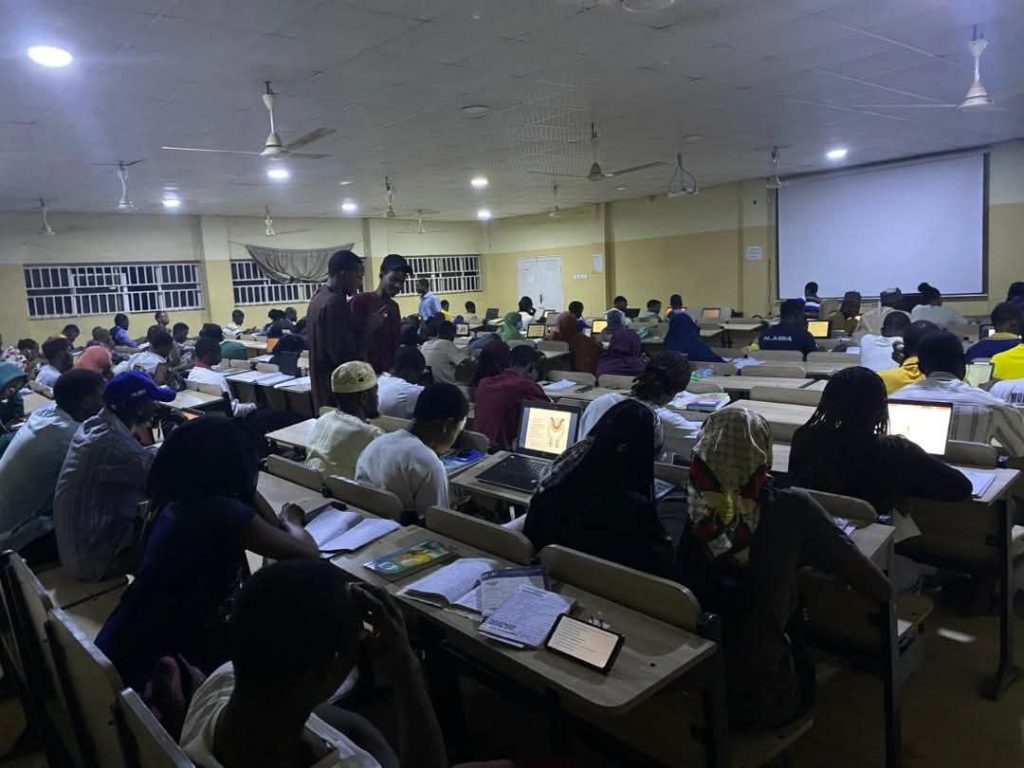
Today, in many Nigerian campuses, sleep has become a privilege rather than a necessity. Hence, students shift focus on taking the night as a resting time to taking it as hours of productivity.
10 pm onwards, a time originally for light-out, light is seen turned on in hostels, classes are packed with students ready for hours of reading, a culture known to be for exam periods only.
One of the main reasons for this, is the bulky academic schedule. During the day, students’ schedules get filled up with lectures, extra-curricular activities, volunteering commitments among host of others. And after scaling through all these, little time will be needed either to prepare for a meal or to have a brief rest.
Hostel distractions, daytime responsibilities and unfavourable daily schedules make it barely realistic for students to dedicate hours to read or revise topics during the daytime or even early night time. The only option they seem to be left with, is the late-night hours. These hours offer silence, a sense of focus with fewer distractions, making it easy for students to concentrate and cover topics.
Beyond academics, Nigerian universities’ infrastructural abnormalities contribute to the situation. Students wait for electricity to be restored at midnight, leaving them with no option than to adjust to the situation. In fact, they will have to leave their books to iron their clothes, charge their gadgets and take other productivity advantage of the restored electricity.
Poor internet connectivity during daytime, shared living spaces, make night-time the most efficient and practical time to have the best moment. Staying up at night is rather a choice but a coping mechanism.
Psychologically, students attach the quietness of night as being in full control as there is absence of lectures, phone calls, and other distractions. Students who had sleepless nights are now seen as the “serious ones” while those who slept all night to rest are being tagged “unserious”.
Students however have the illusion that being awake for hours denotes productivity, even when learning efficiency is drastically reducing. However, having sacrificed hours of sleep to read eventually results in a reduction in attention span, memory retention and reasonability. This makes students emotionally exhausted.
Students however believe that others are gaining advantage by staying awake for longer hours forgetting true discipline lies in managing time wisely, not in enduring exhaustion. This results in generation running on caffeine, energy drinks, burnout, and chronic fatigue.
Night reading might feel like the solution but it has very deep challenges in the aftermath. As the saying implies “Normal does not always mean healthy”, the normality of sleeplessness is not a healthy idea. Students should limit the overnight study and study smart rather than being awake all night.
If night has been a preferred classroom for Nigerian students, what has happened to the day?
Photo Credit: Abduganeey Alahanpe