Diary of a student Nurse: “Your health is not about how you feel”
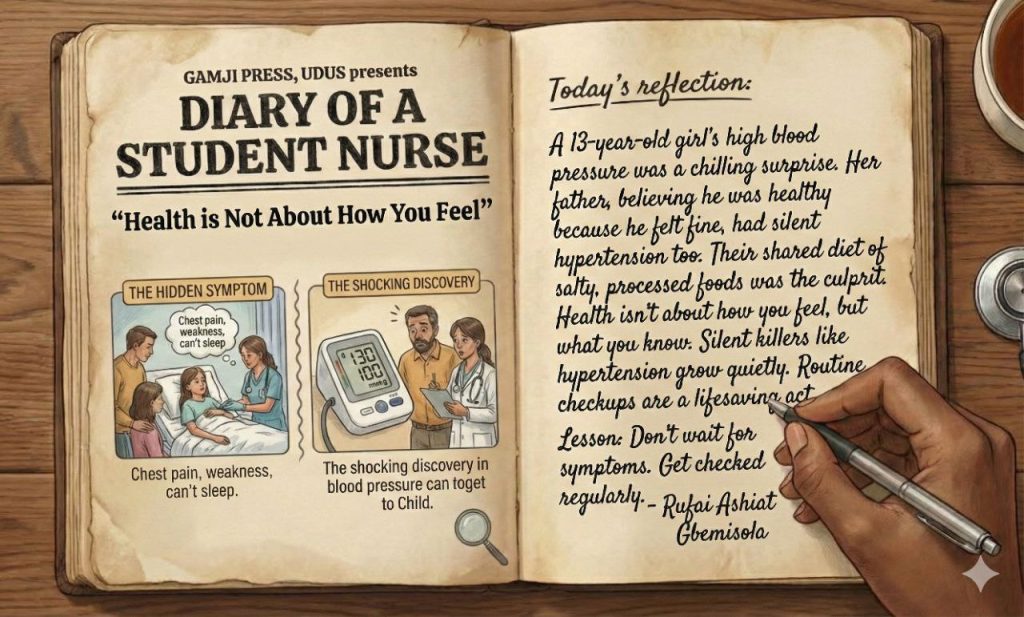
The sun had begun to slant through the ward window, a perfect indication that my morning shift has ended. Having completed my duties of serving medications with my nursing notes written, my bag was already in my hand, indicating my readiness to go home and have some rest after a hectic day in the ward.
Surprisingly, instead of stepping out, something unknown kept holding me back. Little did I know that an encounter that will leave me with a lesson I would never forget was about to happen. While trying to battle the feeling that my day was not yet over in the ward, a 13-year-old girl was rushed into the ward.
The girl looked so small, but with mountains of complaints. “I cannot sleep, my chest hurts, I feel weakness over my entire body,” she complained. I was listening with little or no attention until a senior nurse called my name loudly, instructing me to check her vital signs.
Dropping my bag and getting the reward for not leaving the ward early, I set off with the trolley, ready to check her vital signs. Every signs; temperature, pulse and respiration were normal until I measured the blood pressure and the number sent chills down my body. The sphygmamometer read 130/100 mmHg, indicating hypertension. I had to recheck and the same appeared. For a child? How could someone that young be in such condition?
We turned to her parents and asked if they have any family history of hypertension. They shook their heads and said there was no hypertension in their family. The father even doubted our reading and suggested that the machine might be wrong. I then asked him gently when last, he had checked his own blood pressure. He hesitated and admitted that he had never done so. He believed he was healthy because he felt normal.
We explained that while family history is a key risk factor for hypertension, it is not the only cause, especially in children. Possible causes include kidney conditions, hormonal disorders, obesity, and daily lifestyle habits.
When we asked about their diet, the mother shared that they often ate processed foods, fried snacks, and added extra salt to almost every meal. It was normal in their home and never considered dangerous.
We encouraged the father to check his blood pressure right there in the ward. The result shocked everyone. He was hypertensive too. He had been living with it silently, probably worsened by his love for salty food. Unfortunately, the fact he saw no symptoms made him believe he is not hypertensive.
Further tests were carried out on the girl to rule out underlying medical conditions. Thankfully, her results pointed to primary hypertension, likely triggered by dietary habits and influenced by her father’s undiagnosed condition. Not only through genes, but through shared family routines and lifestyle choices.
We sat down with the family and created a simple action plan. They were advised to reduce salt and fried foods, replace processed snacks with fruits and vegetables, begin gentle daily walks together, and schedule monthly blood pressure checkups for both father and daughter.
The father’s eyes filled with tears as he realized that his habits had unknowingly affected his child, but he also felt hopeful when we assured them that with consistency and care, both could manage their blood pressure effectively.
While I placed back the instruments used in measuring the vital signs, I discussed the importance of awareness with the father.
“In many communities, hypertension is detected late, only after stroke, kidney failure, or heart disease has already begun. For children, school health screenings can catch problems early. For adults, routine checkups should start early, even when there are no symptoms,” I explained.
Our health is not about how we feel but what we know. Silent illnesses like hypertension, sometimes, do not come with symptoms. They can grow quietly in the body until the damage is done. The only thing that could expose them is routine checkups.
Having spent another 1 hour beyond my normal schedule in the ward, I went home feeing fulfilled, having educated the family. This, I believe could save someone someday and that is why I am sharing this with you, in my dairy.
My name is Rufai Ashiat Gbemisola, a 300-level student of Nursing Sciences Sometimes. I am putting this out so we can all learn, take charge of our health and see regulars checkup as a lifesaving act.