How Private Investment is Reviving Sports Culture at UDUTH
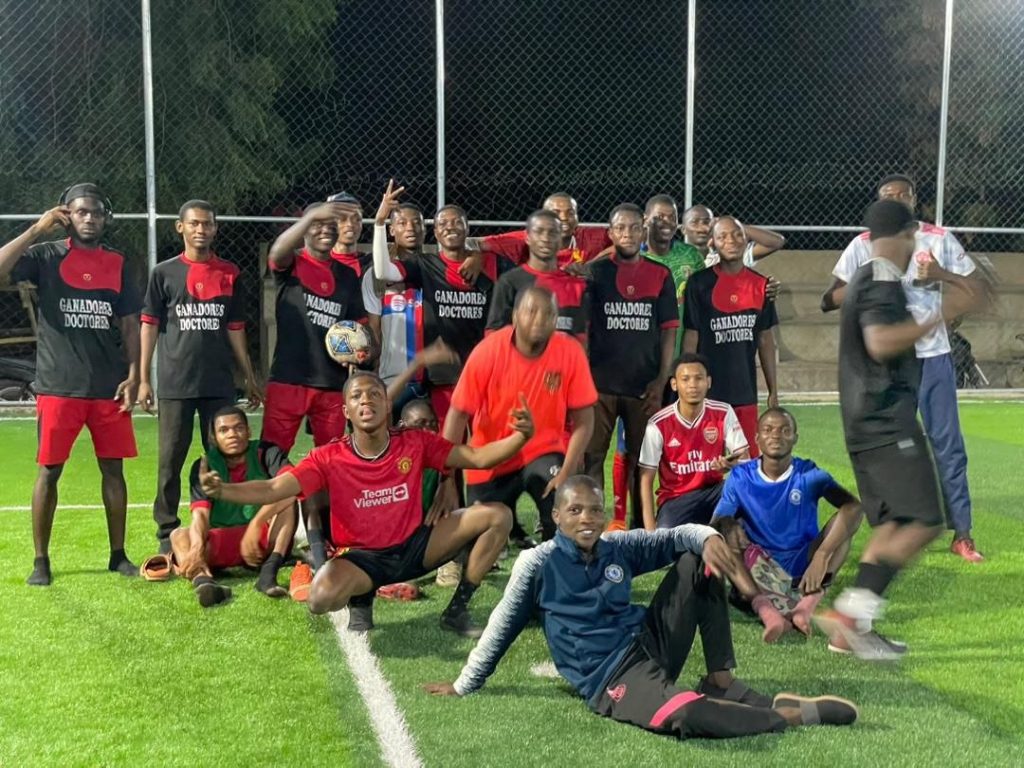
When Ayo was offered admission to study Nursing Sciences at Usmanu Danfodiyo University, Sokoto, just like most students, he was asked to make a checklist by his father. In between demanding the purchase of textbooks, writing materials, Ayo inserted football boots.
For Ayo, he grew up with the love for football in mind. It was an activity that defined his childhood as no day passes without kicking the spherically shaped sporting equipment. When his father saw the list, “football boots? Do you think you will have the time to play football in medical school?” he asked.
The question from Ayo’s father is not an unreasonable one. Medical school has long been associated with long-stretch of lecture hours, laboratory practicals, clinical postings, ward rounds and examinations. This makes one believe that medical students, across universities, trade their football boots for stethoscopes as they do not have the luxury of time to partake in sporting activities.
Years after that conversation with his father, Ayo’s experience tells a different story. Up till 11:00PM everyday, the newly established football arena beside the staff quarters at the Usmanu Danfodiyo University Teaching Hospital is still alive with activity. “Nobody could believe, years ago, that a scene of this nature could ever play out at the Usmanu Danfodiyo University Teaching Hospital,” Ayo said.
This new transformation is not because the academic workload of students has reduced, resulting in more free time, but that they have finally found a space made possible by private investment that makes physical activity accessible.
A New Arena, A New Routine
The situation changed in January 2026, when P5 Sport Complex, a modern five-a-side football arena was established. Unlike the conventional football pitch, the facility features high-quality artificial turf, protective fencing, overhead netting and LED floodlights that allow matches to continue well into the evening.

Its location was also well thought of, as instead of travelling outside campus to rent football pitches, students could now organise games within walking distance of their hostels and lecture halls. For many, that convenience was enough to rebuild a sporting culture that had gradually faded.
“I personally find myself participating more actively and consistently. The distance of the pitch to my hostel is just 2 minutes walk. This gives me the opportunity of enjoying the games without worrying about space or interruptions. It has also encouraged more students to join and take sports seriously,” Alahanpe said.
Asides providing a platform for students to burn fat and exercise their body, the facility is also serving as an informal meeting point where students from different departments interact outside classrooms. This strengthens friendships and encourages interdisciplinary relationships rarely fostered within academic settings.
Abdurrahman, a 300-level Nursing student, shares in the belief that the arena has become more than a football pitch. “The arena gives students a chance to interact, make new friends and enjoy sports together. Football can be physically demanding, but it’s also a great way to relieve stress, stay active and take a break from daily activities. After playing, I usually feel refreshed and more relaxed.”
More Than a Game
While sporting activities on campus are a form of recreation, the impact extends beyond that. According to the World Health Organization adults are recommended to engage in at least 150–300 minutes of moderate-intensity physical activity every week, explaining that regular exercise improves cardiovascular health, mental well-being, and enhances cognitive performance. For university students, particularly those in demanding programmes such as Medicine & Surgery, Nursing Sciences, Physiotherapy, Optometry, Radiography, these benefits are important.
A study on the motives and barriers for regular exercise among medical students shows that medical students are among the least physically active groups on many university campuses with heavy academic workloads, prolonged study hours, clinical responsibilities and examination pressure as courses.
In another study conducted in different countries, it is identified that lack of time is the biggest barrier preventing medical students from participating in regular sporting activities. That reality was once evident at UDUS.
Before the construction of the privately owned football arena, sporting activities among medical students, particularly football enthusiasts, were constrained by limited facilities at UDUTH. The only pitch available, the Amanawa pitch was shared among different departments, making regular matches difficult to organise.
“Before the arena was built, sports participation on campus was quite challenging. “We had very limited space as the only pitch available for the university students was the Amanawa pitch which even required payment. This made scheduling matches or even casual games difficult because multiple teams and groups had to compete for the same small area,” recalled Abdulganiy Alahanpe, a 300-level Medical Laboratory Science student.
What this caused, according to Abdulganiy, is decline in students’ enthusiasm for sports. Even those willing to play often abandoned the idea because securing a suitable pitch became a challenge.
Filling the Institutional Gap
The football arena is not a university-owned facility, but a product of private investment. According to the in-charge of the arena, Haruna Bala, proximity was the driving motivation behind the project.
Students, he explained, should not have to leave campus to access quality recreational facilities. “We noticed that students do have to go out of UDUTH sometimes to have their football games played. That was why this arena was built so that sporting facilities can be closer to them. An added advantage to this facility is that match times extend as long as 11PM. This gives the students as much time as possible to have their football matches played after a long day.”
Booking records made available by the facility showed that more than 300 football matches have been played, averaging several fixtures every week. On many evenings and weekends, nearly every available time slot is booked by student groups, departmental teams and faculty associations.
This observed rise in bookings suggests that the availability of a standard facility has incited a behavioural change in the students. A study on sports participation among Nigerian university students found that football remains the country’s most popular campus sport, with a majority of students identifying inadequate facilities as one of the major obstacles to regular participation. Researchers concluded that improving sporting infrastructure significantly increases students’ willingness to engage in physical activity.
For medical students, whose schedules are among the busiest in higher education, the availability of nearby recreational facilities can be particularly important.
When Private Capital Steps In
The emergence of the football arena also reflects a changing reality across Nigerian universities. Just as seen with Amana rides with the transportation of female students at UDUS, SportStar providing private sporting access to students, private investors are increasingly stepping in to provide services once considered the exclusive responsibility of universities. Student hostels, shopping complexes, cafeterias, transport services and recreational facilities are being financed through private capital.
Economists often describe this kind of investments as an example of public-private complementarity, a situation where private businesses provide services that governments or public institutions struggle to deliver efficiently. Rather than replacing public investment, such projects fill immediate gaps while generating employment, stimulating local economic activity and creating new services for consumers.
Universities also have their own benefits to reap from this type of partnership. Without committing scarce institutional resources, campuses gain modern facilities that enhance student life, improve the university’s attractiveness to prospective students and encourage healthier lifestyles.
For investors, the university environment offers a concentrated market with consistent demand, students benefit from convenience, and the university acquires infrastructure it might otherwise have waited years to develop.
More Than a Football Pitch
The success of the arena has sparked conversations beyond football. Students say the facility has become a venue for association activities, charity matches and interdepartmental competitions that previously struggled to find suitable venues.
For Abdulfatah Temitope AbdulSalam, a 400-level MBBS student, the arena has become more than a place to play. “All work and no play is never healthy. Sometimes I don’t even play. I just sit there and watch others. Even that helps me relax after lectures. The atmosphere itself is refreshing,” he explains.
AbdulSalam believes the facility has also strengthened student engagement. “Because it’s within the university, associations now find it easier to organise sporting activities. More students are participating simply because it’s accessible.”
Education experts have long argued that universities should develop the “whole student” rather than focusing exclusively on academic achievement. Recreational spaces encourage teamwork, leadership, resilience and interpersonal relationships. These are qualities that are important, especially, for future healthcare professionals who will spend their careers working in multidisciplinary teams.
For medical students, these opportunities may be even more significant, considering the demands of healthcare training. The growing popularity of the arena points to the fact that student demand for organised recreation has always existed. Rather than viewing private investment as competition, university administrators could see it as evidence to support broader investment in sports infrastructure, wellness programmes and campus-wide recreational initiatives.
If one privately funded football arena can record more than 300 matches within a few months of operation, it suggests that the challenge was never a lack of interest or unavailability of time among students but that of the facility to engage in such.